Classifier Before Quote
The homepage feels broad and reassuring, but the quote shell immediately narrows the visitor by industry before it reveals much product detail.
The quote shell looks universal, but the real work happens before any meaningful quote output appears: industry, trade, email, human check. Construction is the fullest captured spine; consulting shows the correction logic; cleaning shows that a lighter classifier still lands on the same early gate.
Next qualifies the lead by exact business identity before it spends any real quote output on them. The early MQL gate is business-type precision, then email, then anti-bot.
This is an MQL filter disguised as a quote flow. The visible stepper says quote, but the opening job is to classify the business tightly enough to decide how much downstream underwriting effort the visitor gets.
The homepage feels broad and reassuring, but the quote shell immediately narrows the visitor by industry before it reveals much product detail.
Construction gets a dense multi-select trade picker, consulting gets search plus a correction modal, and cleaning gets a lighter single-service selector.
The most useful sequence is now explicit: industry, trade, email, PRESS & HOLD, business attributes, then a GL recommendation.
Every tested branch asked for email before meaningful quote output, and the live construction rerun shows the anti-bot challenge sitting directly on that step.
This is the most complete quoting path captured for Next. The latest live rerun pinned down the exact email and verification handoff, and the earlier cleared construction evidence shows the first two post-gate states that follow it.
The flow opens at /quote/get-started with What industry best fits your business? and a visible five-step rail: Start, Coverage, Application, Quote, Purchase.
The construction branch switches to /segments-cobs?...segment=CONSTRUCTION&state=9, asks What type of work do you do?, and allows up to three trade selections.
Selecting General Contractor routes to /quote/get-started/email?...&segment=CONSTRUCTION&state=9&cob=100001 and personalizes the page around that exact trade.
The email screen embeds a PerimeterX PRESS & HOLD challenge. One normal hold interaction in the April 6 rerun returned Please try again, confirming the gate is active friction rather than passive decoration.
Earlier cleared construction evidence then shows a short business-attribute screen under Coverage and a General Liability recommendation card under Application with E&O included.
What matters for us is not just the quote spine, but which segments get correction logic, which get richer classifier depth, and when the system decides the lead has earned a package reveal.
This is the richest branch captured. The system asks the visitor to classify the business precisely, resolves a real construction trade key, then uses the email-and-bot step as the bridge into later quote states.
The consulting branch shows Next being explicitly skeptical about vague profession labels and forcing the visitor to disambiguate before continuing.
The cleaning branch looks simpler, but it does not relax the lead-capture posture. The classifier is lighter; the gate is not.
These route families show which branch output Next assigns before the lead is considered worthy of deeper quote effort. It is not one universal intake component.
| Family | Primary Route | Visible Pattern | What It Signals |
|---|---|---|---|
| Homepage StorefrontBroad promise, proof, and vertical shortcuts | / | Hero promise, coverage cards, trust metrics, shortcut CTAs | The site opens wide and reassuring before the quote shell narrows the visitor. |
| Core Quote ShellOne question, six industry tiles, visible stepper | /quote/get-started | Centered shell, state combobox, dominant Continue button | Next sells the feeling of a quote flow, but the opening work is really classification. |
| Construction BranchTrade-heavy classifier with the deepest captured downstream state | /segments-cobs?...segment=CONSTRUCTION | Long multi-select trade list, email gate, short attribute screen, GL recommendation | Heavier-risk segments get more explicit business shaping before the package reveal. |
| Construction Email GateProfession-specific handoff before the deeper quote states | /quote/get-started/email?...&cob=100001 | General Contractor reassurance, email field, PerimeterX PRESS & HOLD | Human verification is part of the opening lead-capture step, not a late-stage fraud check. |
| Professional Services BranchCorrection-first route for ambiguous labels | /segments-cobs?...segment=PROFESSIONAL_SERVICES | Search field, popular services, correction modal, email gate | Next does not trust loose labels like Business Consulting Services at face value. |
| Cleaning BranchLighter classifier, same lead-capture pressure | /segments-cobs?...segment=CLEANING | Single-select service picker then email-plus-bot gate | Lower ambiguity changes the control, not the lead-capture posture. |
Recovered from the earlier richer pass and the current rerun evidence: Next is not one signup config. The quote shell, homepage shortcuts, vertical merch pages, and agent/partner routes all do different top-of-funnel jobs.
The homepage already pre-segments intent with profession and industry shortcuts. Branching starts before the formal quote shell.
Construction is the clearest heavy-underwriting config: rich classifier first, then email and anti-bot, then finally package logic.
Professional services uses a high-ambiguity config. The user must clarify what kind of consulting business they are before the lead can progress.
Cleaning shows that lower ambiguity changes the widget, not the MQL threshold. Even the simple selector still lands on the same early email-and-bot wall.
Vertical SEO pages like the general-contractor page do richer package and pricing storytelling than the quote shell itself. The merch config often lives outside the form.
Agent and partner routes show that direct self-serve is only one TOFU config. Next also supports advised and embedded acquisition motions around the same core quote engine.
The motion clips make the handoff between homepage promise, classifier, correction, and email gate much easier to understand than still images alone. The later quote/application states are still carried by still evidence because the bot gate blocked an uninterrupted rerun.
The public storefront is already segmenting the user before the formal quote shell even appears.
General Contractor behaves like a strong downstream key. One trade choice is enough to route straight into lead capture.
The branch pauses the funnel and forces the visitor to rule out adjacent professions before proceeding.
The lighter service picker feels simpler, but it still collapses into the same email-plus-bot checkpoint.
This evidence set now covers both the surrounding trust/distribution frame and the concrete construction quote spine the previous lighter page underrepresented.
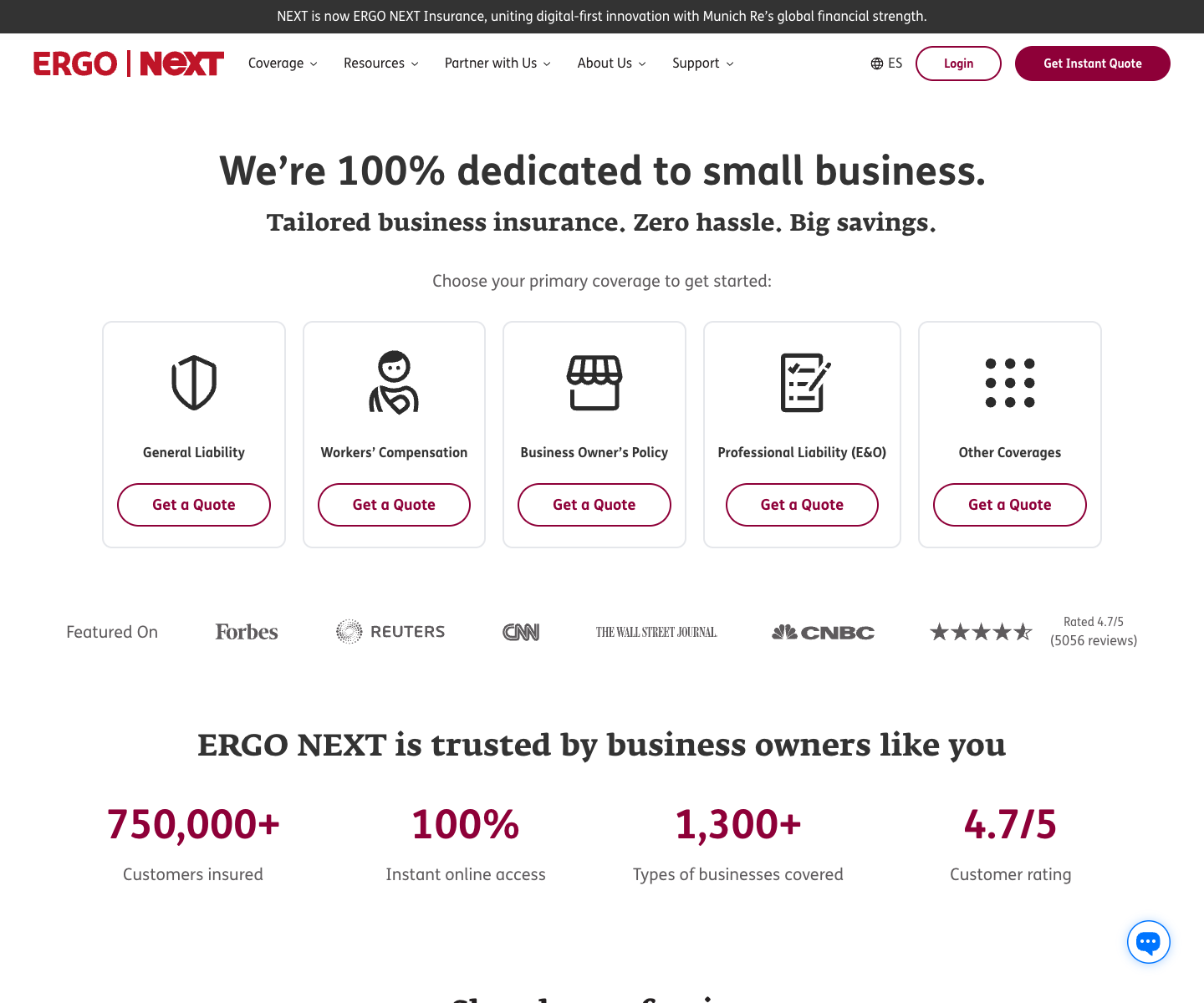
The first screen is a wide insurance storefront: speed, simplicity, breadth, and reassurance before any classification begins.
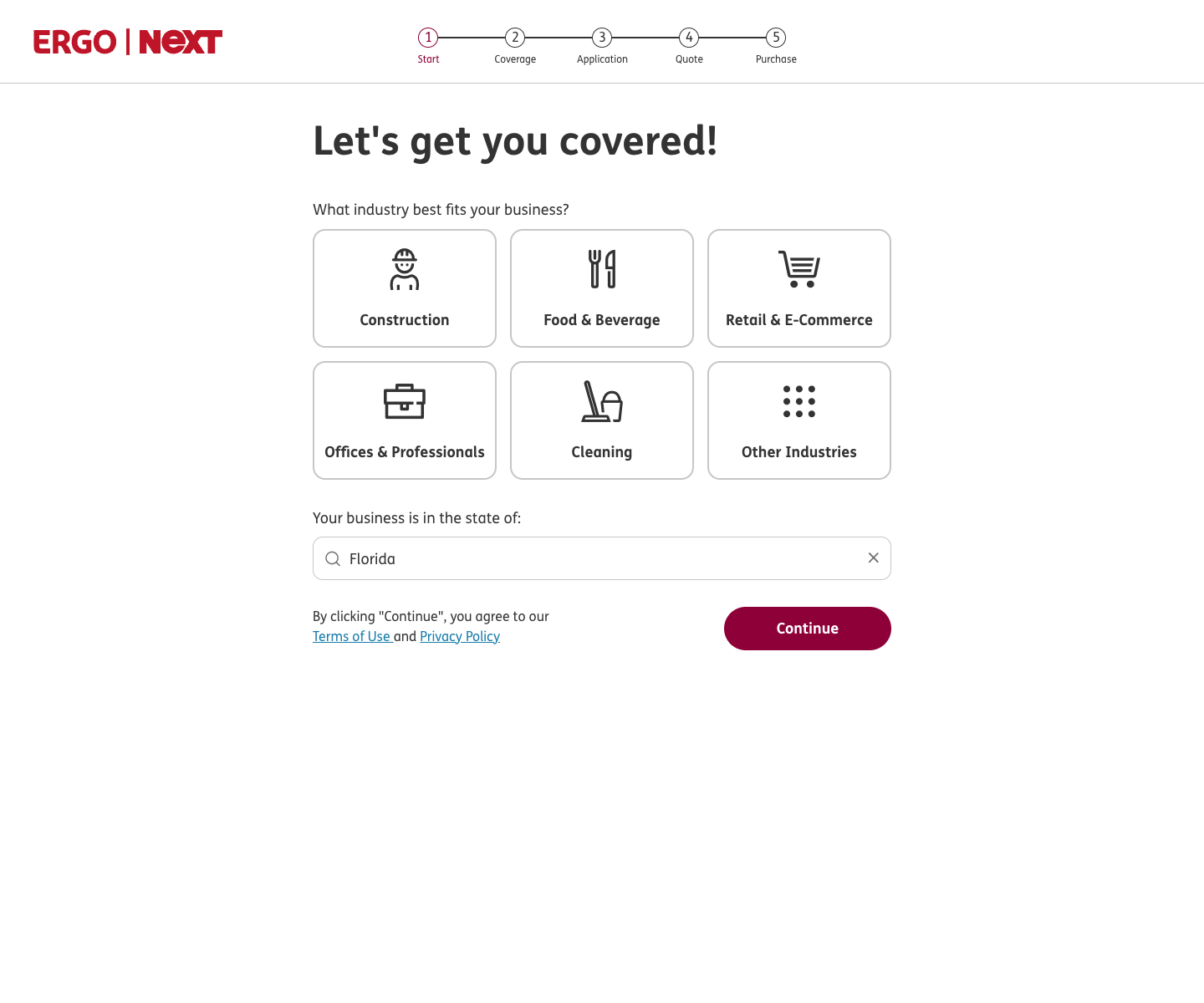
The five-step shell looks like a quote experience, but the first practical job is asking which industry the business belongs to.
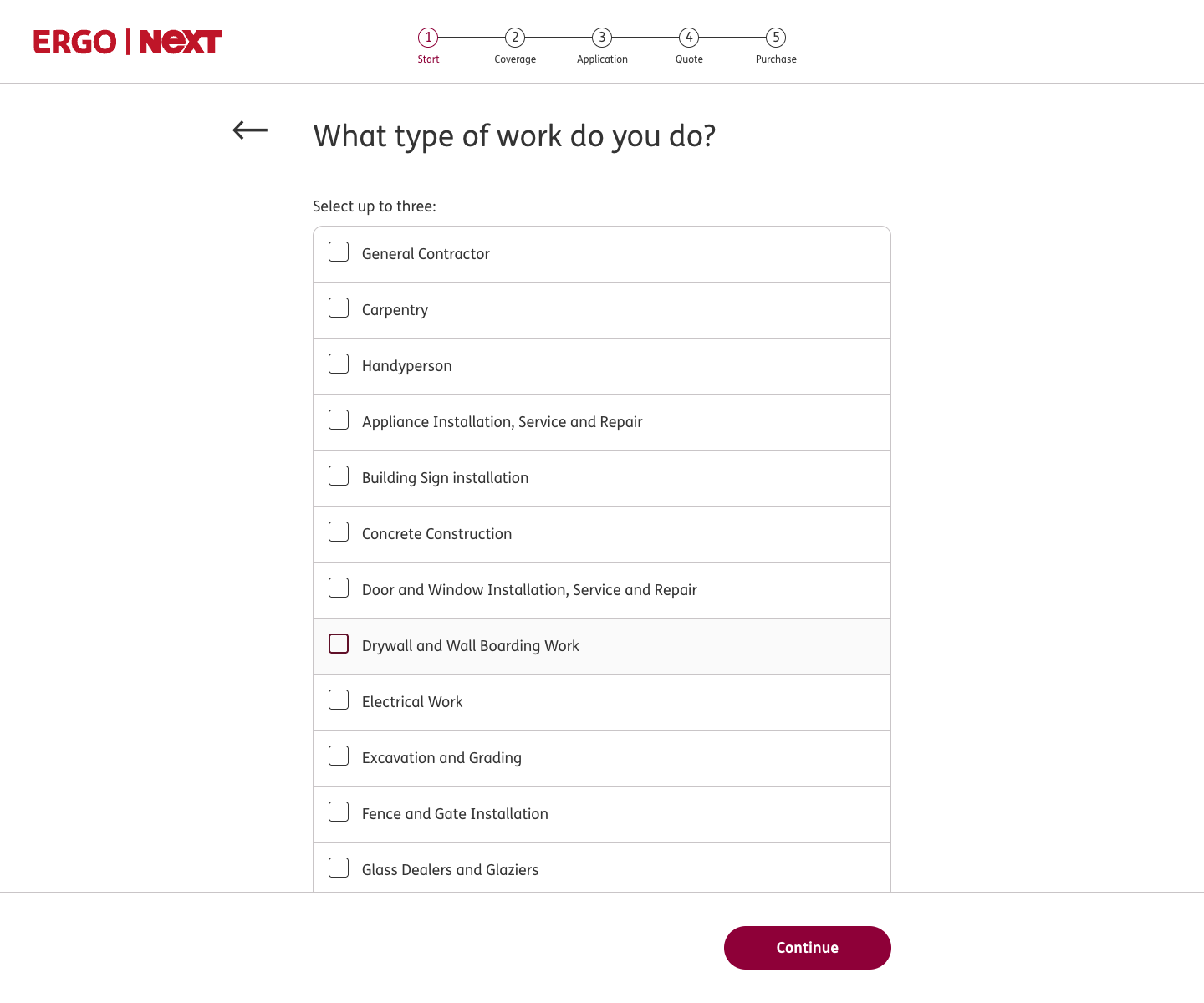
Select up to three turns the page into an underwriting shaper, not just a simple business-type picker.
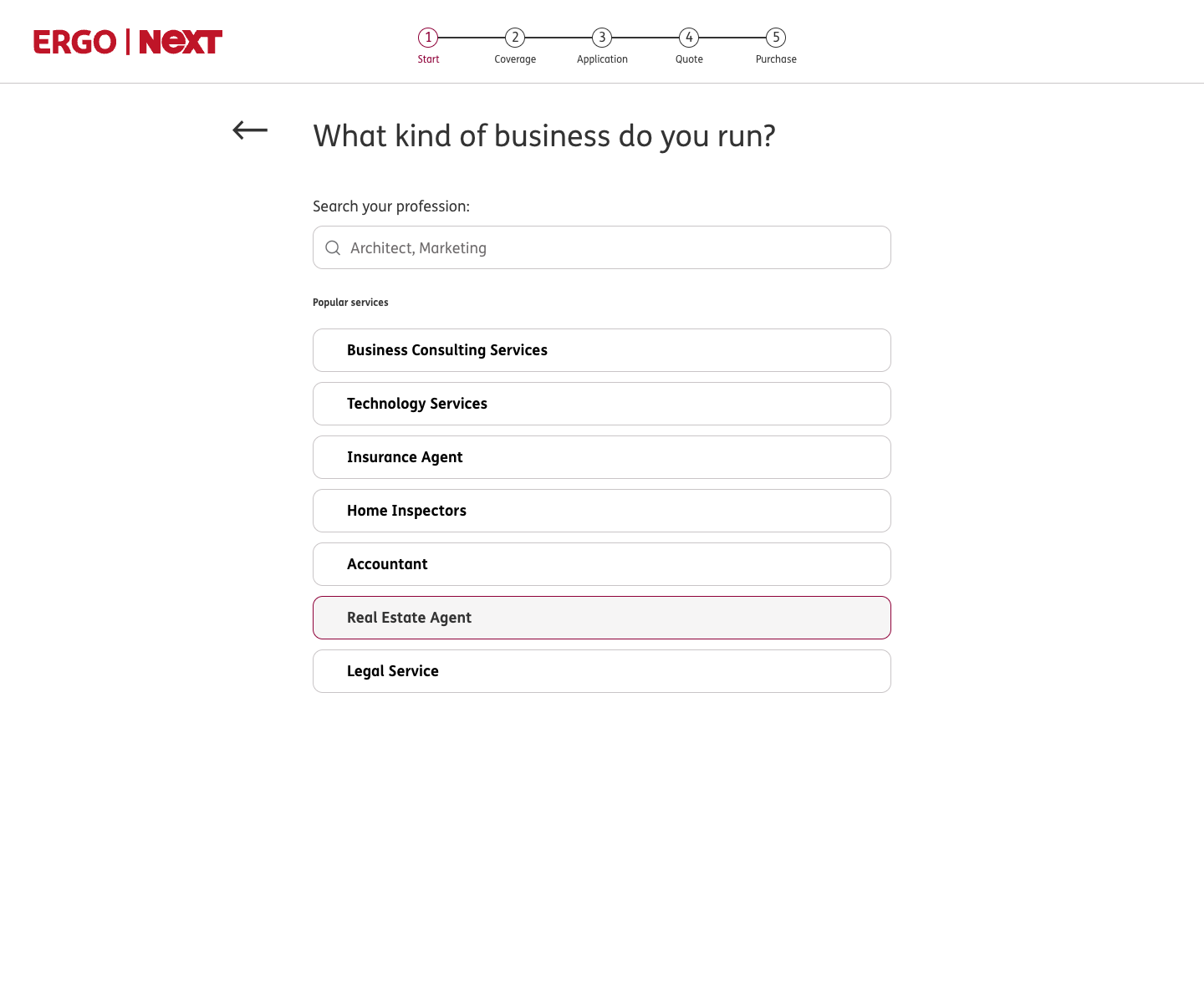
This branch feels more like choosing a professional identity than answering a generic form field.
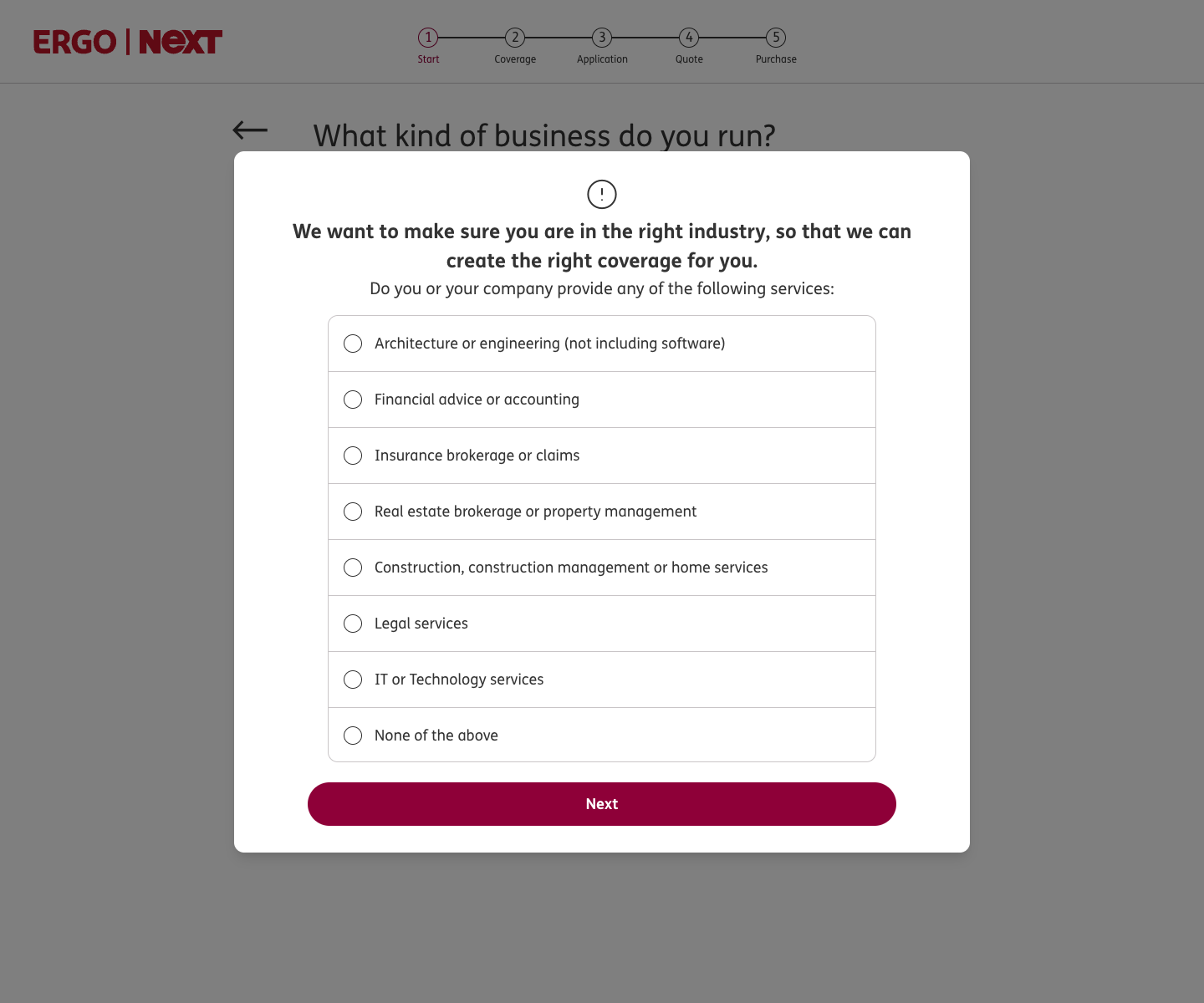
Next explicitly checks whether the business should actually be treated as legal, accounting, insurance, real estate, technology, or another adjacent profession.
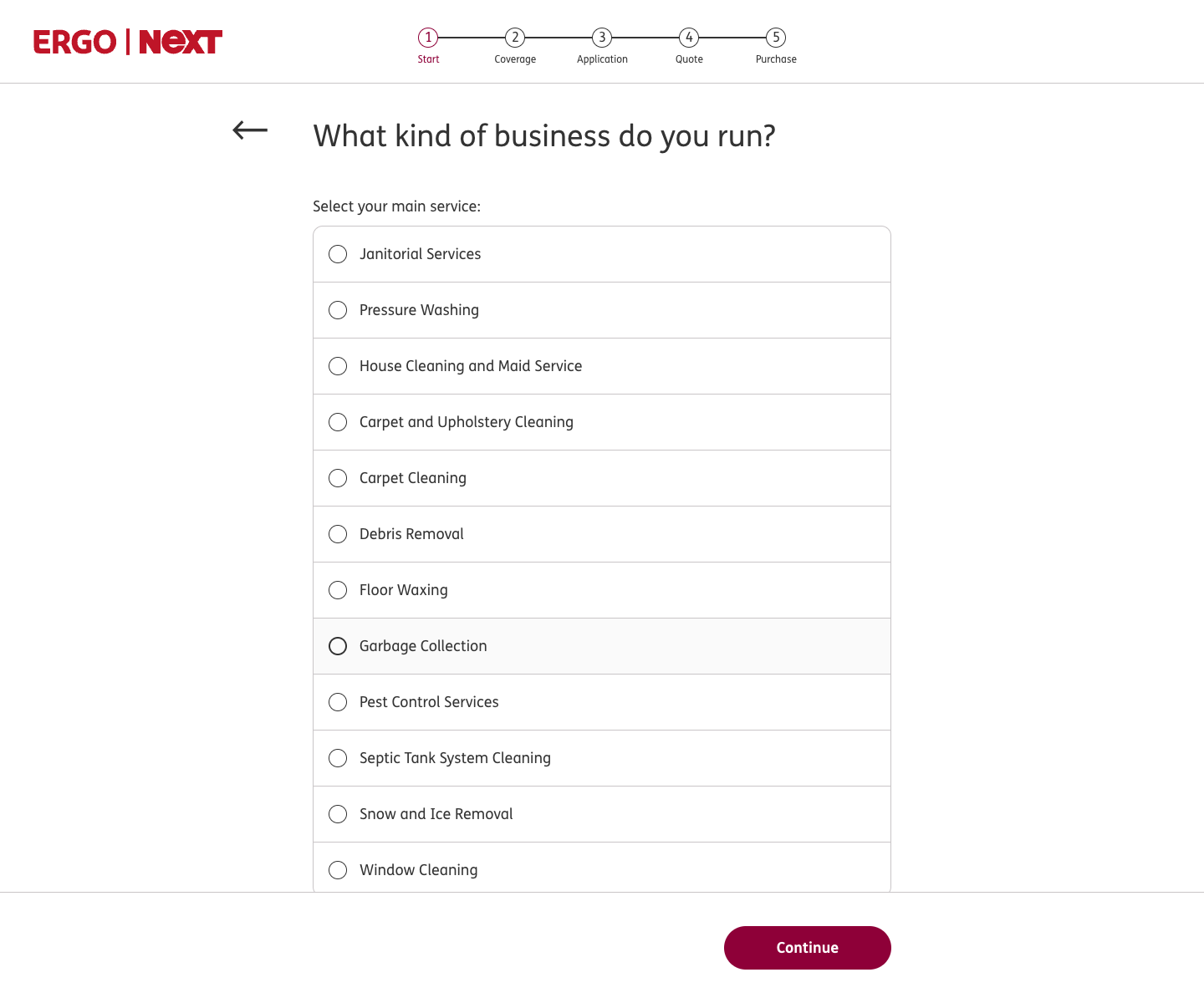
The service picker is lighter than construction or consulting, but it still routes into the same early lead-capture pattern.
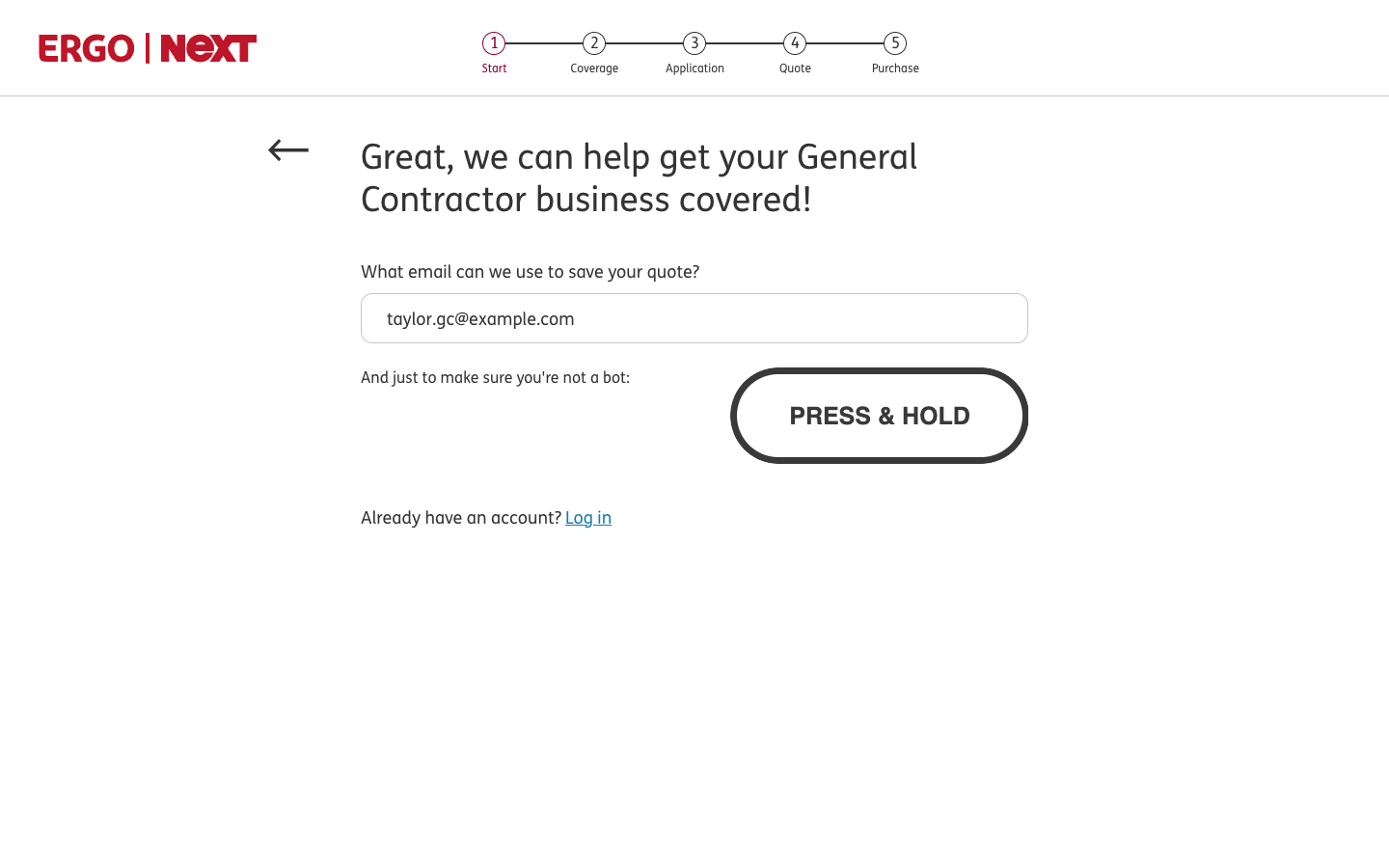
The buyer sees a General Contractor-specific reassurance line, then an email field, then the PerimeterX Press and Hold control, all before any later quote logic appears.
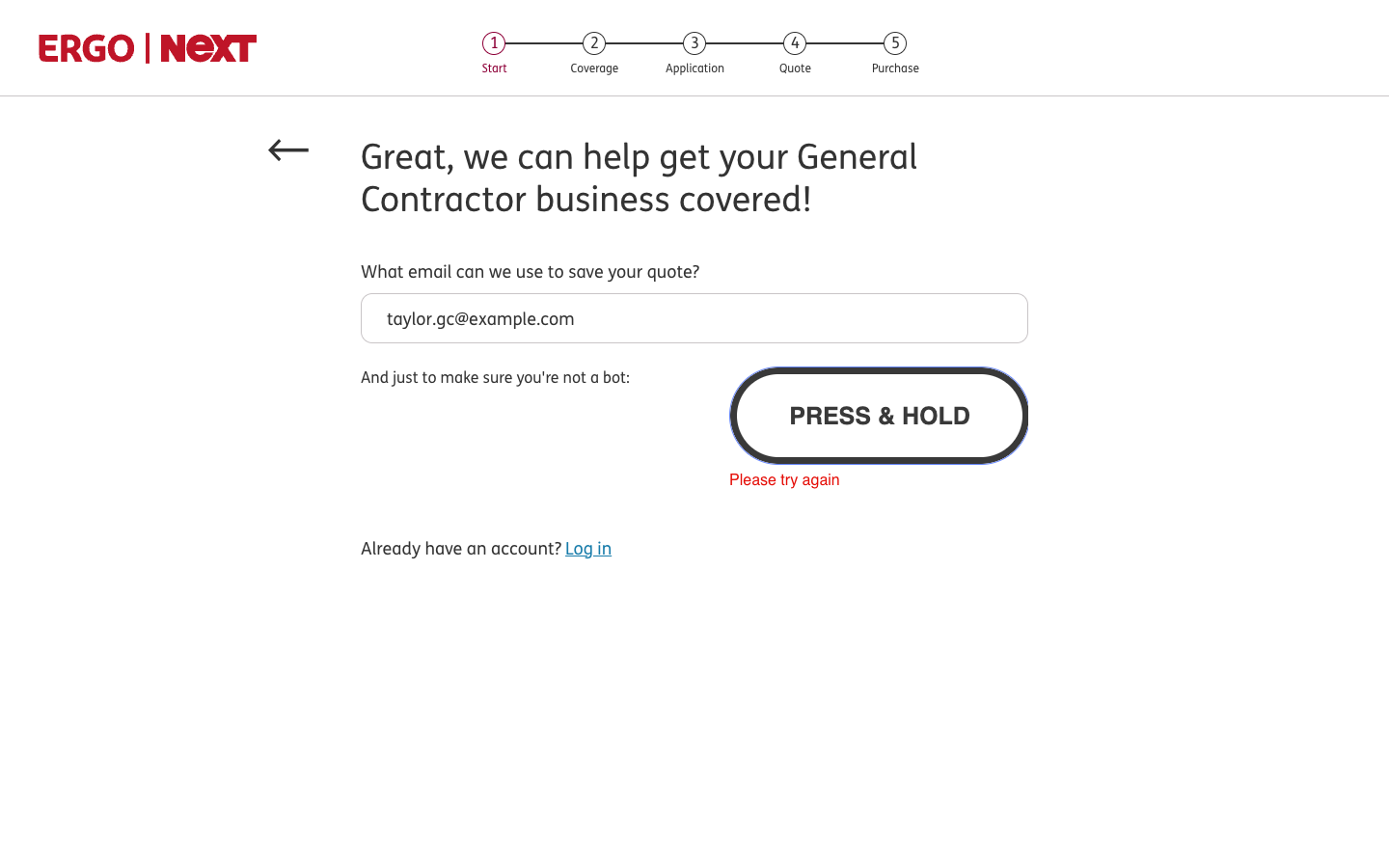
One normal hold interaction in the live rerun did not advance the flow and returned Please try again, which makes the gate operationally meaningful to the opening experience.
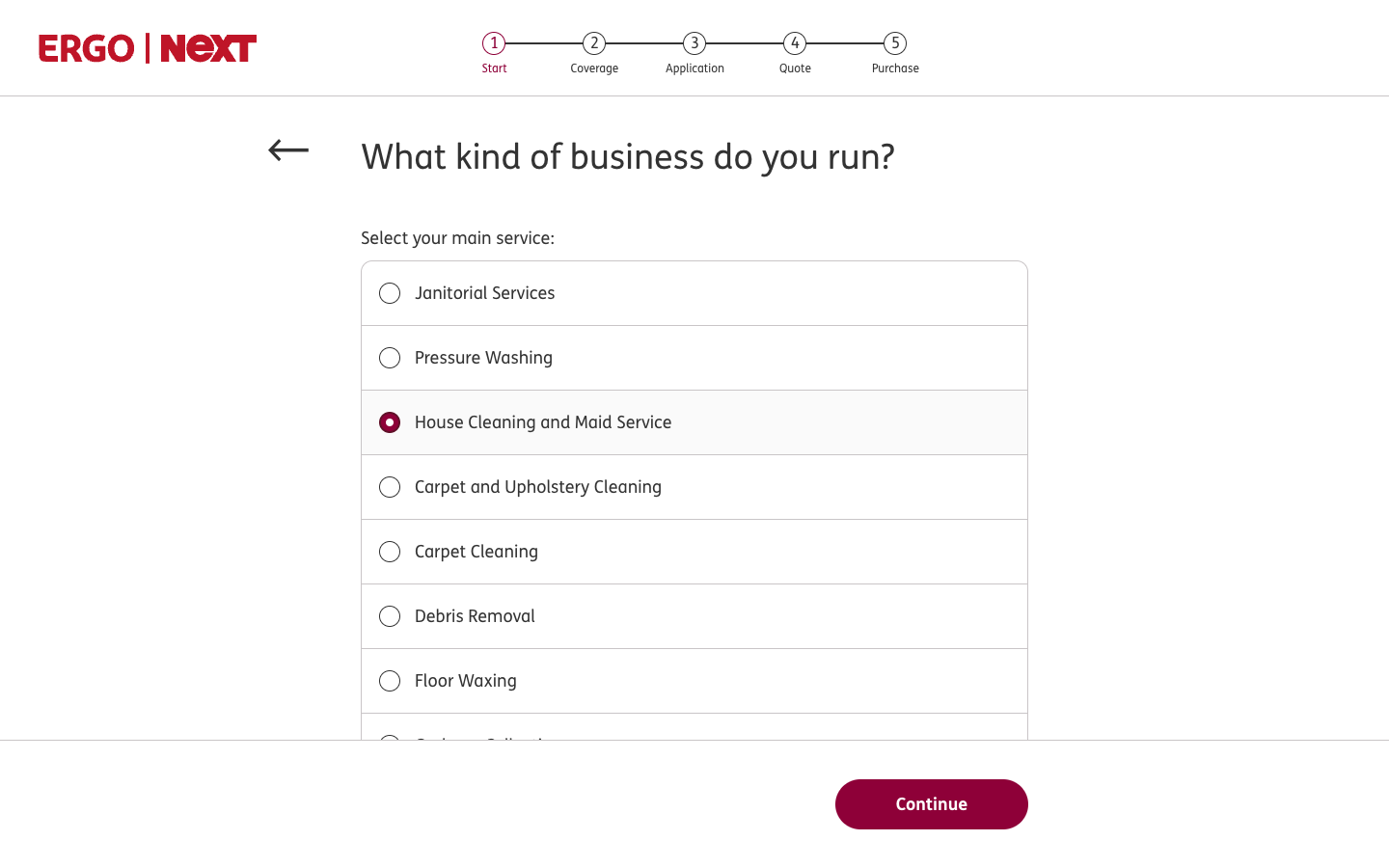
Even the lighter branch converges on the same email-plus-bot checkpoint, which shows how early the lead-capture priority sits.
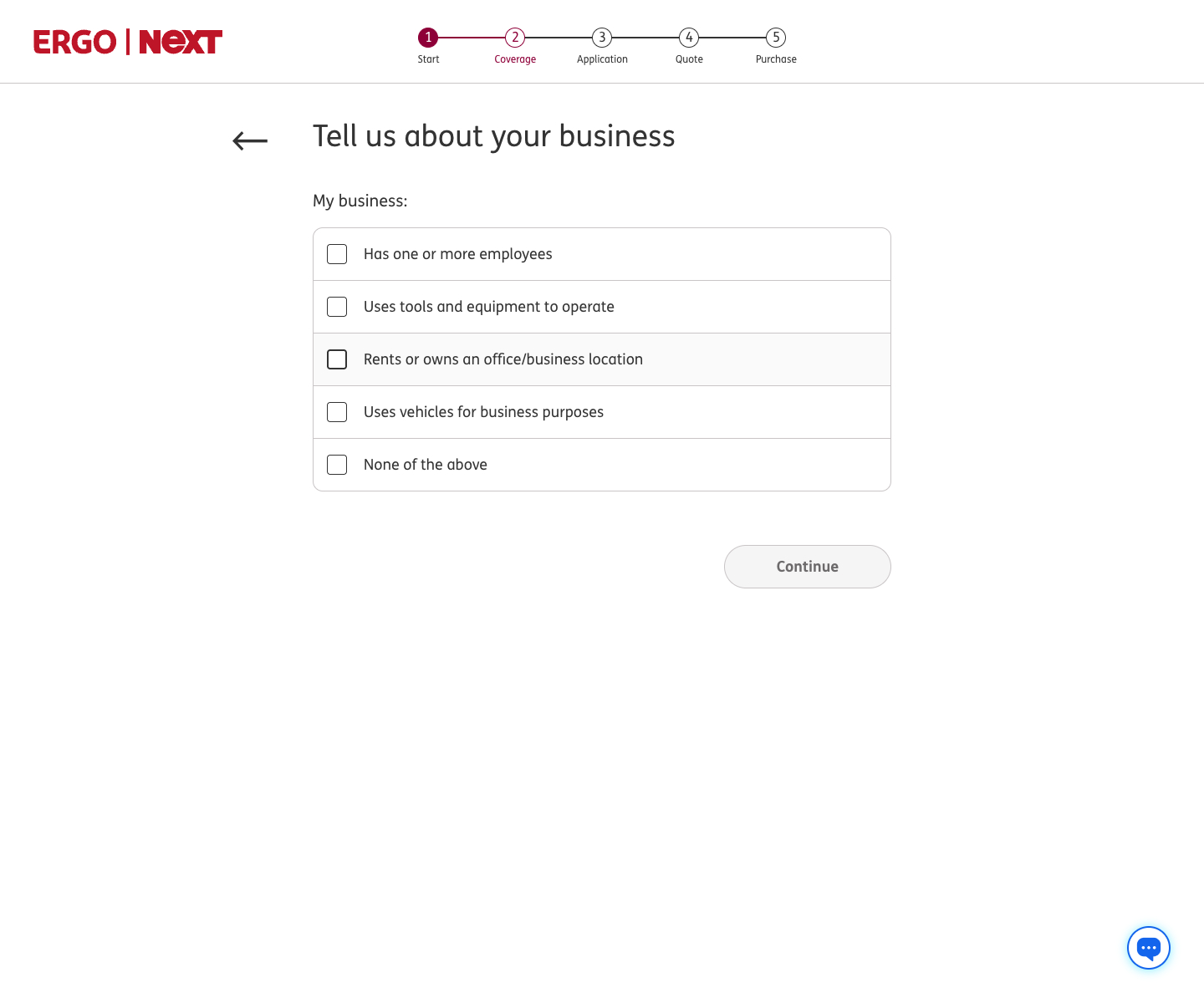
The attribute screen asks about employees, tools, locations, and vehicles, which likely changes downstream bundle logic quickly.
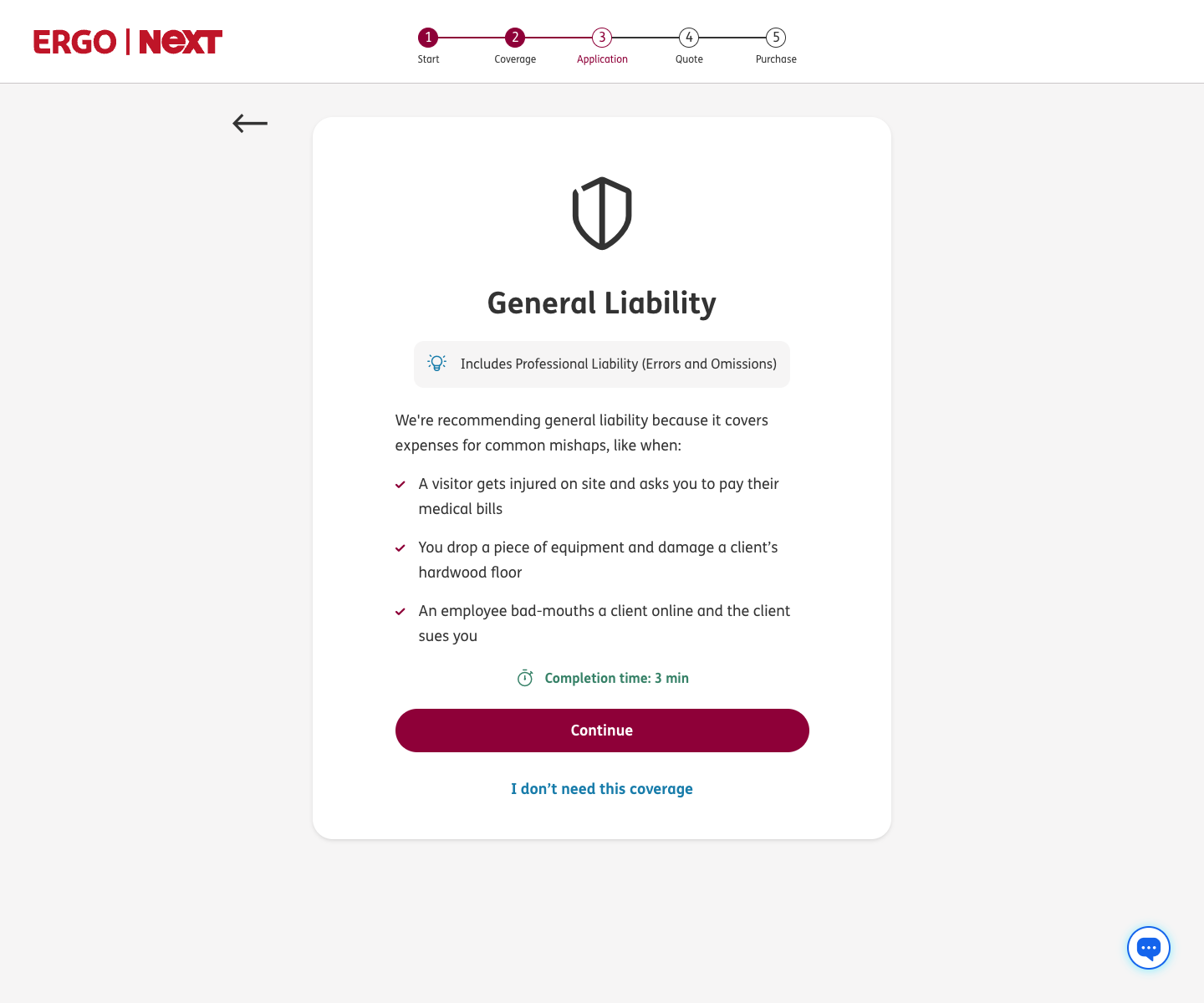
The recommendation card is concise, scenario-led, and still includes an explicit opt-out link instead of forcing a blind continue.
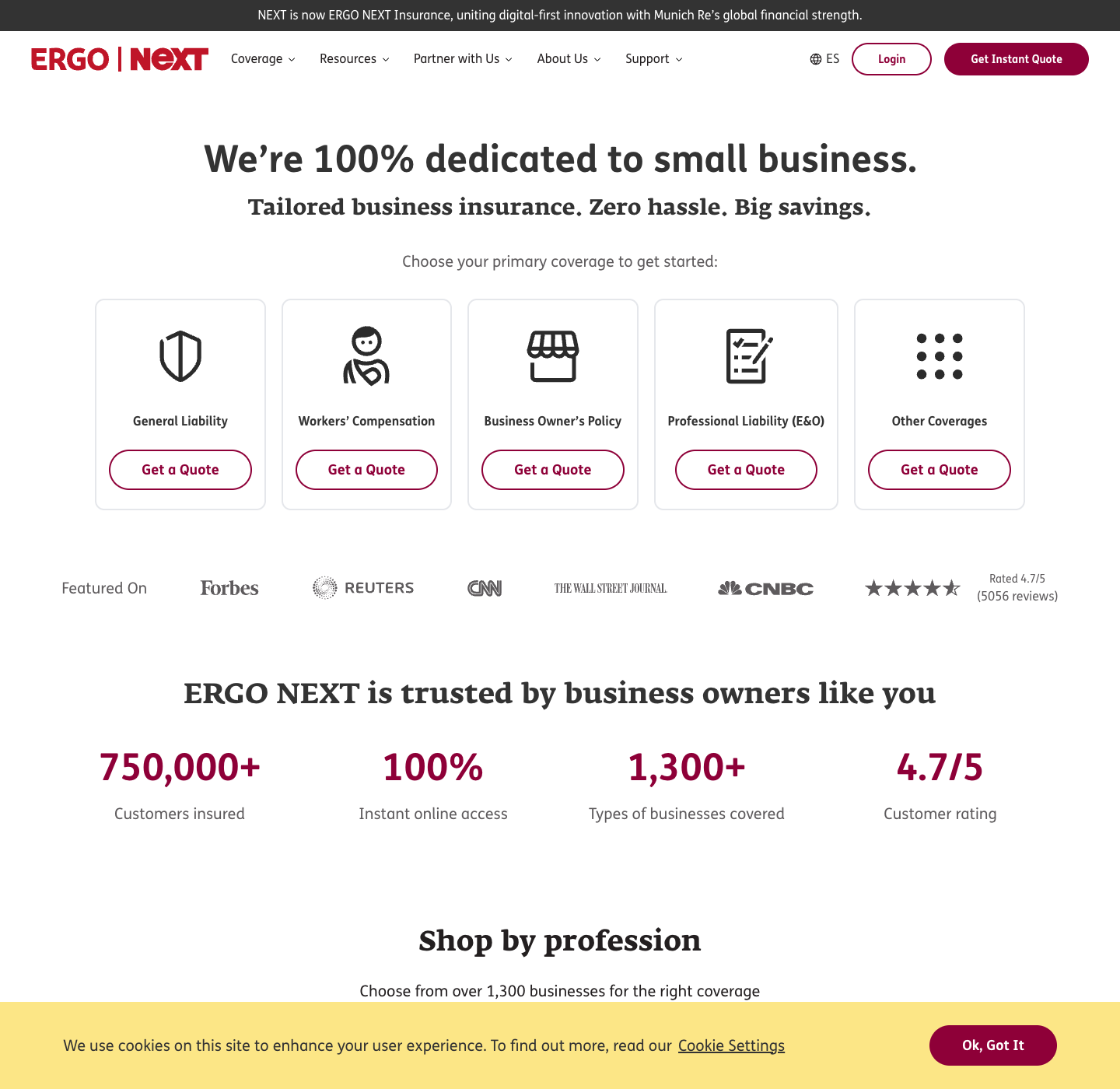
The rebrand is not buried in press material. It is presented at the storefront level as a trust amplifier before the user enters the quote flow.
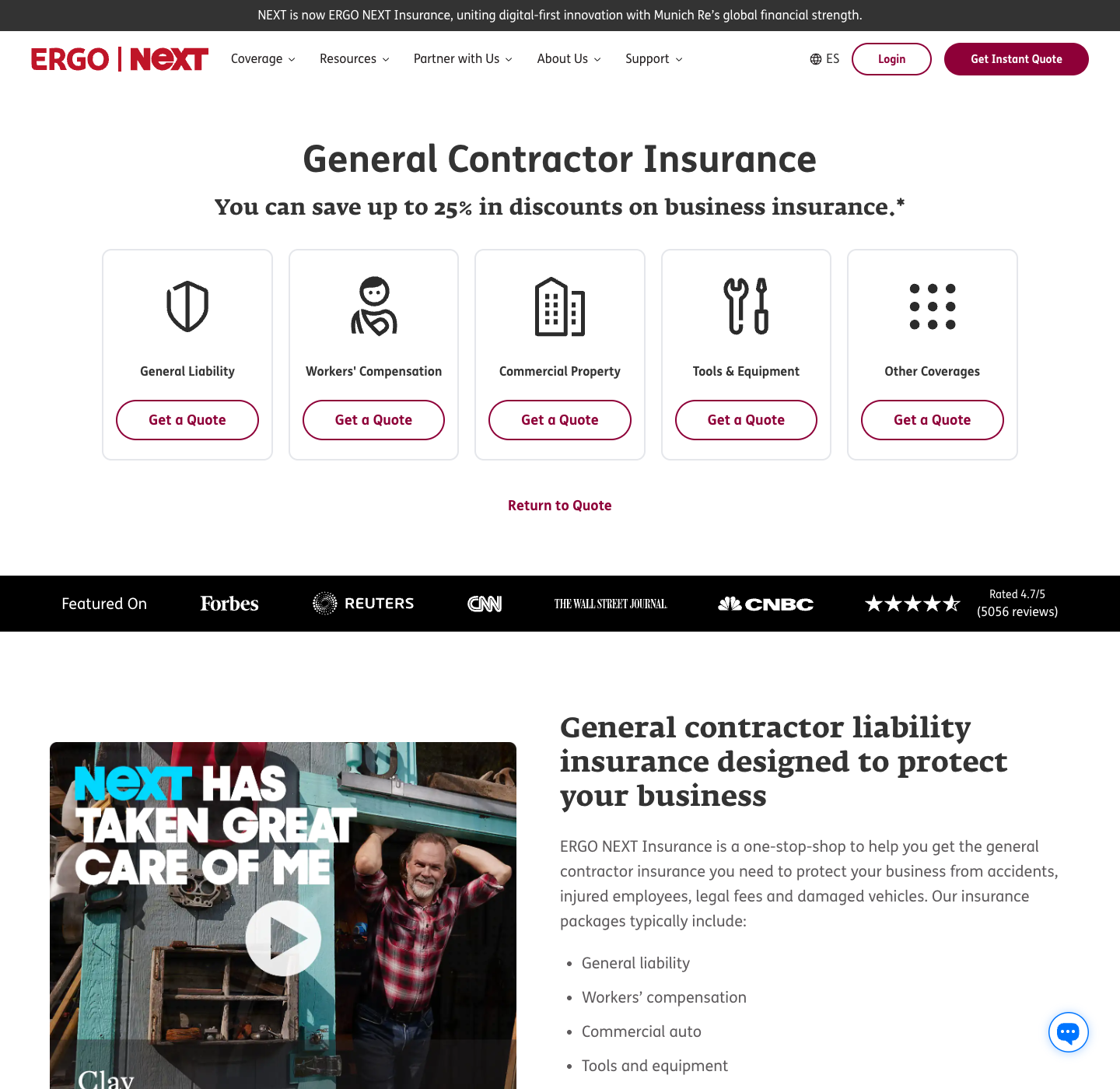
The general-contractor page does product explanation, package framing, and discount talk outside the quote shell itself.