Two Inputs Set The Branch
Free-text business description plus state are enough to decide whether the visitor gets a matrix, a curated package, a policy-specific route, or a compressed fast lane.
Simply Business is useful because it shows how one calm intake frame can branch into very different quote and MQL paths after only two early inputs: business description and state. Once classification firms up, the system swaps recommendation container, route family, question depth, and contact timing.
Simply Business does not treat every started quote as the same kind of lead. The MQL decision is which branch the visitor earns: matrix-first exploration, curated package, BOP underwriting, or a compressed quick_to_quote lane.
This is a branching MQL router disguised as one quote form. The shell stays stable while early classification decides what package logic, qualification depth, and contact posture the visitor gets.
Free-text business description plus state are enough to decide whether the visitor gets a matrix, a curated package, a policy-specific route, or a compressed fast lane.
The contractor ambiguity modal is not generic education. It is a containment device that keeps an expensive or noisy lead from entering the wrong branch.
Some visitors earn broad comparison before contact capture. Others get one recommended package, which is a stronger sign that Simply Business already trusts the classification enough to narrow the sale.
The route family changes with the trade. Generic underwriting, BOP underwriting, and quick_to_quote are the real downstream outputs of the signup branch decision.
For our own MQL branching, the useful pattern is how Simply Business keeps one calm first screen and then decisively swaps package logic, route family, and qualification depth.
Broad recommendation matrix, then a short business-details step, then lead capture. This is the cleanest “earned contact capture” branch.
Instead of a matrix, the user gets “Essential protection” and then Amazon-specific underwriting language immediately after they start.
The system leans hard into property and premises risk, then routes into a BOP-specific questionnaire rather than a generic business path.
Janitorial gets a tailored package, then a much slimmer qualification step than the branches above.
The modal does not just educate the user. Choosing Handyperson rewrites the classification and drops the user into a cheaper, lighter funnel.
These route families are the clearest evidence that Simply Business is assigning different signup and MQL outcomes rather than sending every lead through one universal form.
| Route Family | Observed On | What It Means | Behavioral Signal |
|---|---|---|---|
| /q/coverage_selection/recommendationsMatrix screen | IT consulting | Coverage comparison comes before underwriting. | The system wants the user to inspect multiple relevant coverages first. |
| /q/coverage_selection/tailored_coverageCurated package | E-commerce, restaurants, janitorial, handyperson | A default package is presented with a secondary “pick and choose” path. | The system makes a recommendation before it starts asking operational questions. |
| /q/usa/usa/business/...Generic underwriting | E-commerce, IT consulting | Standard business details flow after recommendation. | Flexible enough for trade-specific questions without a policy-specific shell. |
| /q/business_owners_policy/usa/business/...BOP-specific underwriting | Restaurants | Policy container shifts to Business Owners Policy up front. | The risk shape is premises-heavy enough to justify a policy-specific route. |
| /q/usa/usa/quick_to_quote/...Fast-lane qualification | Janitorial, handyperson | Compressed questionnaire with fewer visible questions. | These trades are being funneled toward momentum and reduced friction. |
Recovered from the strongest live branches rather than invented from theory: these are the actual signup configurations Simply Business appears to switch between once the business is classified.
Best fit for white-collar advisory intent. The visitor earns a comparison surface before contact capture, which makes the lead feel informed rather than prematurely gated.
Used on e-commerce and several service trades. The system picks a default package first, then lets the buyer explore alternates second.
Restaurants get routed into a BOP-specific container rather than a generic business-details path, which signals Simply Business already knows the policy frame it wants.
Janitorial and handyperson routes compress the visible question stack and push for momentum. This is the clearest high-speed MQL branch in the set.
The contractor modal is a real branch switch. The user can be rerouted into a lighter handyperson funnel instead of being forced through the heavier contractor path.
Native browser recordings so you can evaluate where each branch narrows the visitor, when recommendation logic appears, and how late contact capture arrives.
Shows the matrix-first branch: welcome → recommendations → short business-details underwriting.
Shows the curated Essential protection package and the Amazon-specific underwriting transition.
Shows the premises-heavy BOP package and the route shift into business-owner-policy underwriting.
Shows the ambiguity correction resolving into its own package and then a lighter quick_to_quote path.
A scrollable field guide to the strongest screenshots, with enough room to actually read the screens before jumping to interpretation.
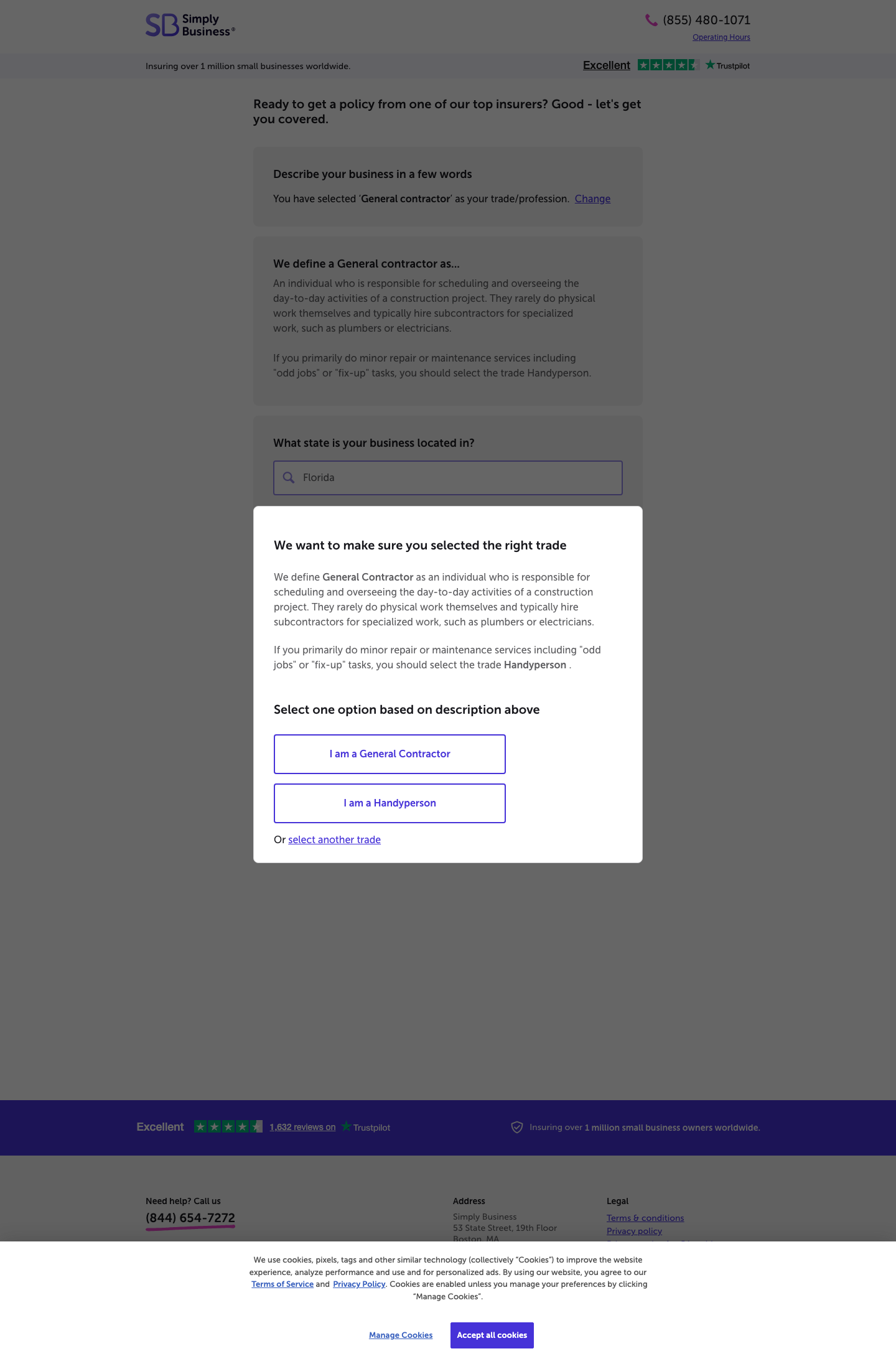
The system interrupts the flow to teach the contractor vs handyperson boundary before proceeding.
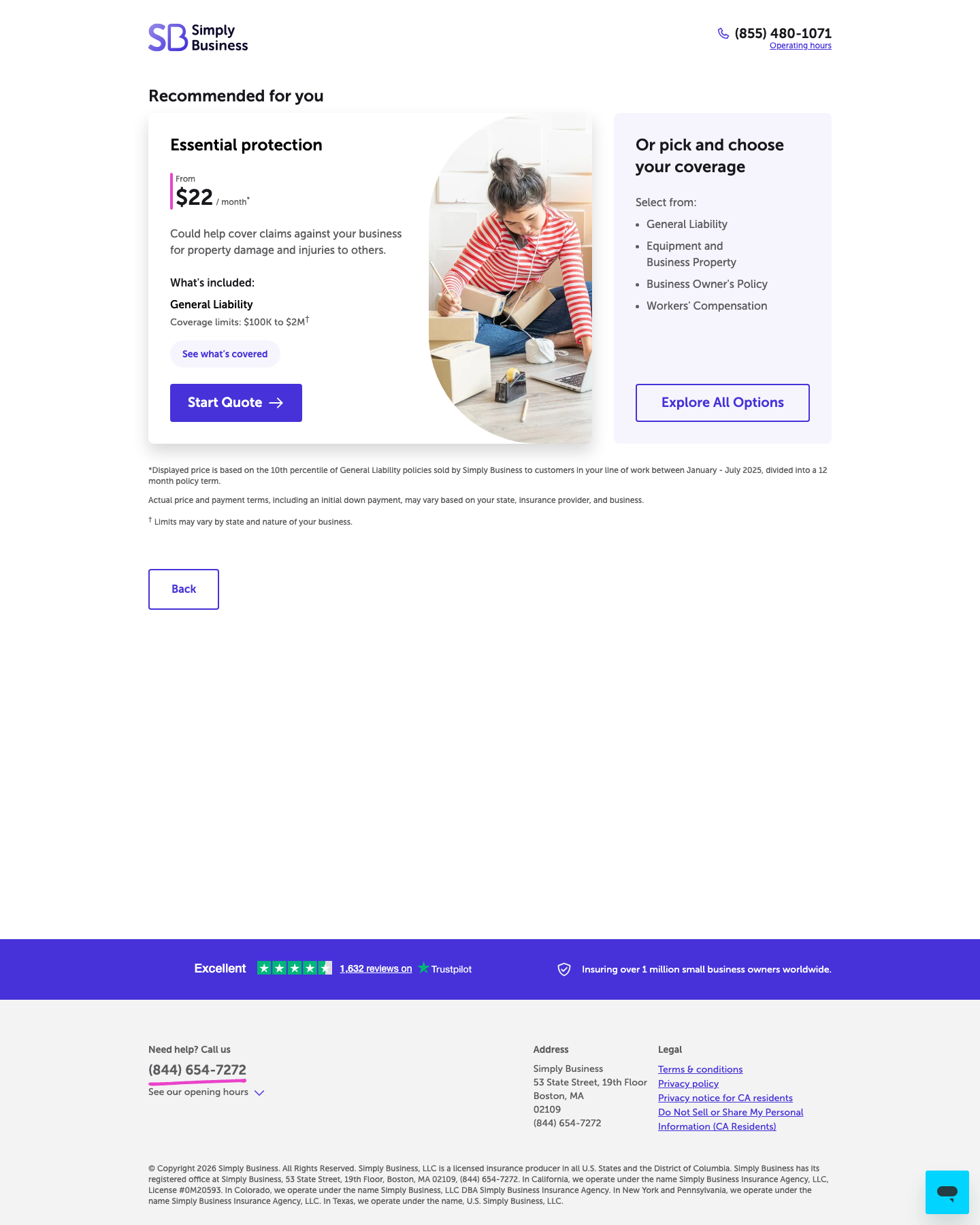
Curated recommendation with a default package and a subordinate exploration path.
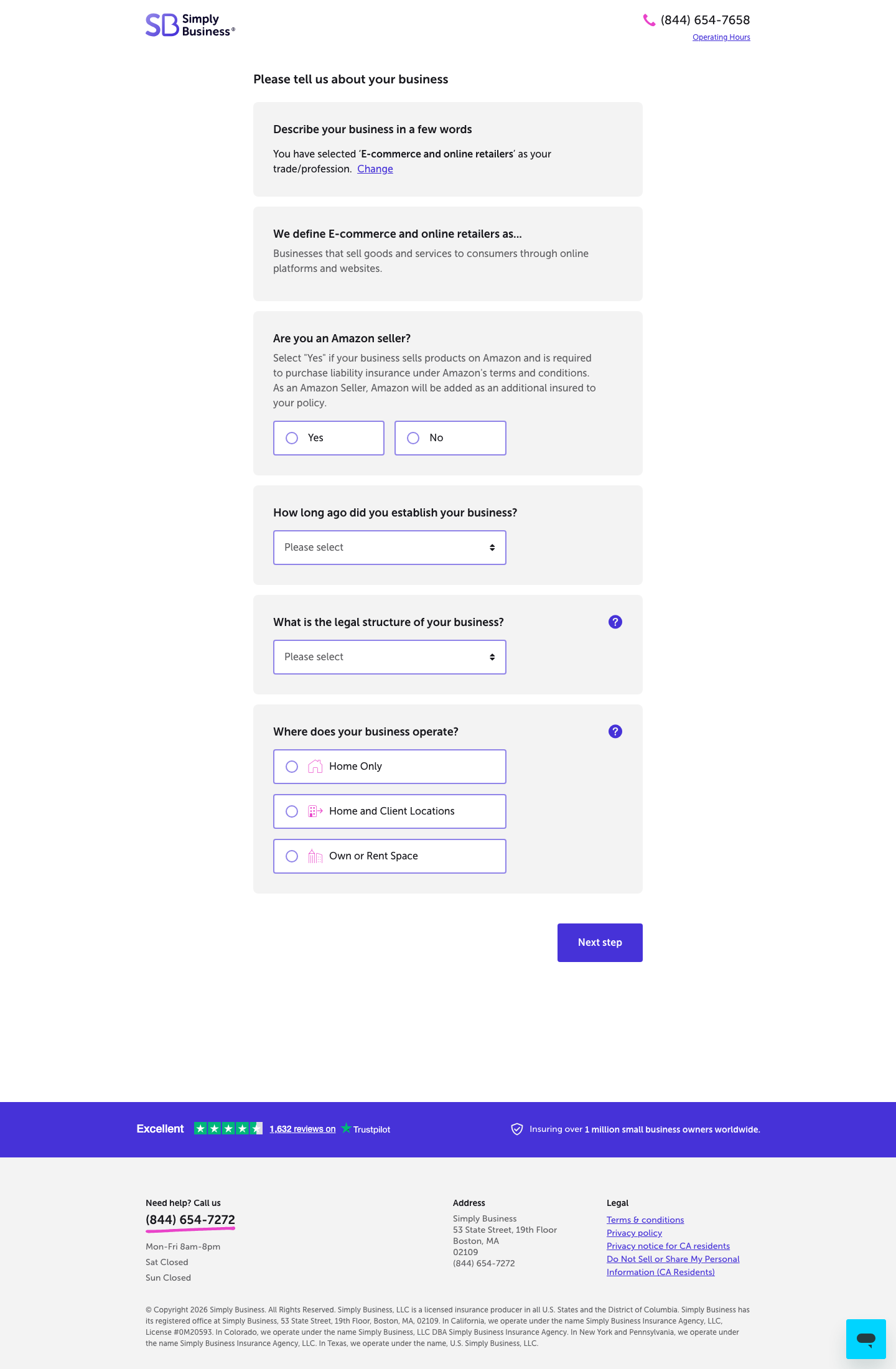
Clear platform requirement copy appears early and makes the underwriting feel purpose-built.
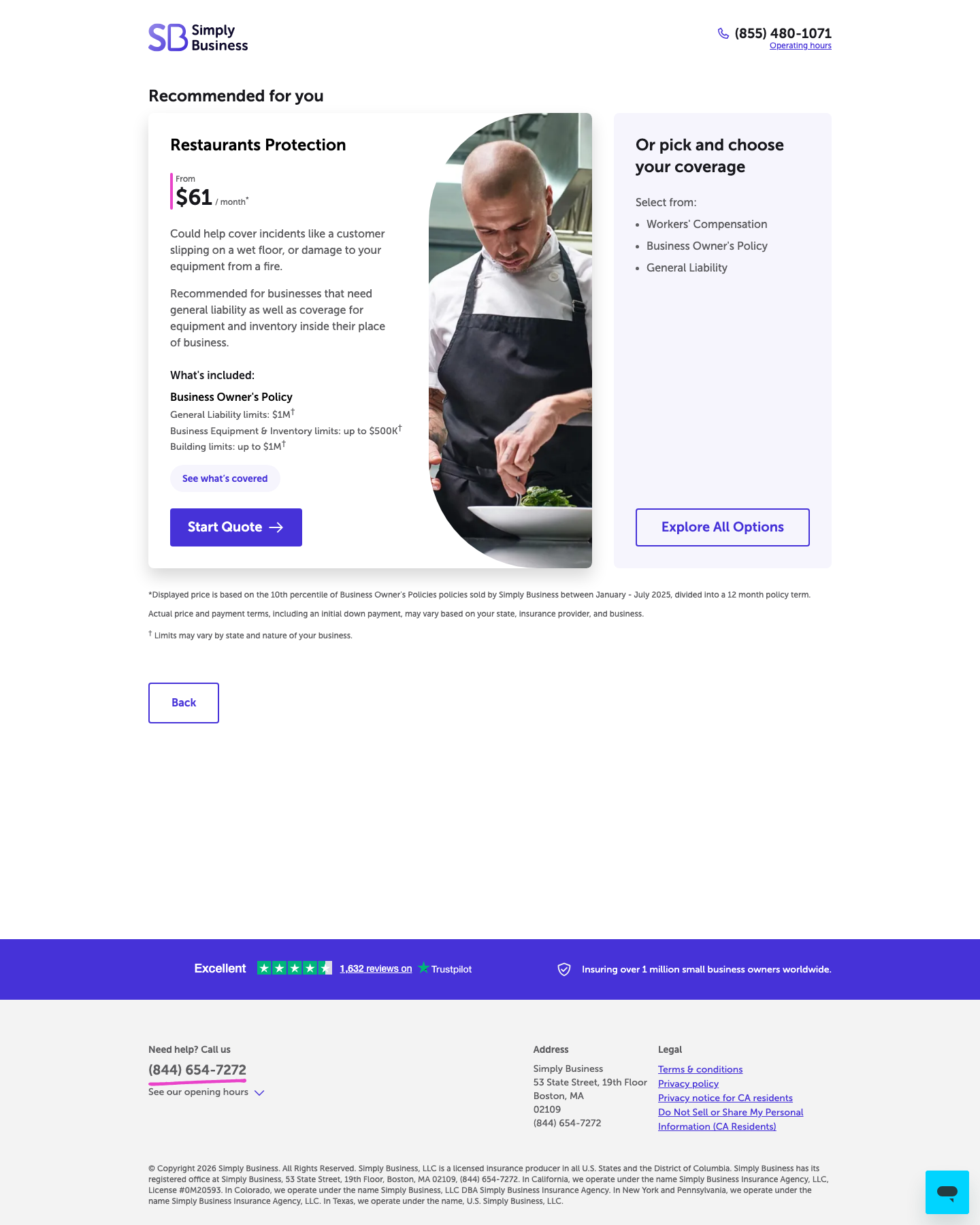
Property and premises risk dominates the copy, which is very different from consultant language.
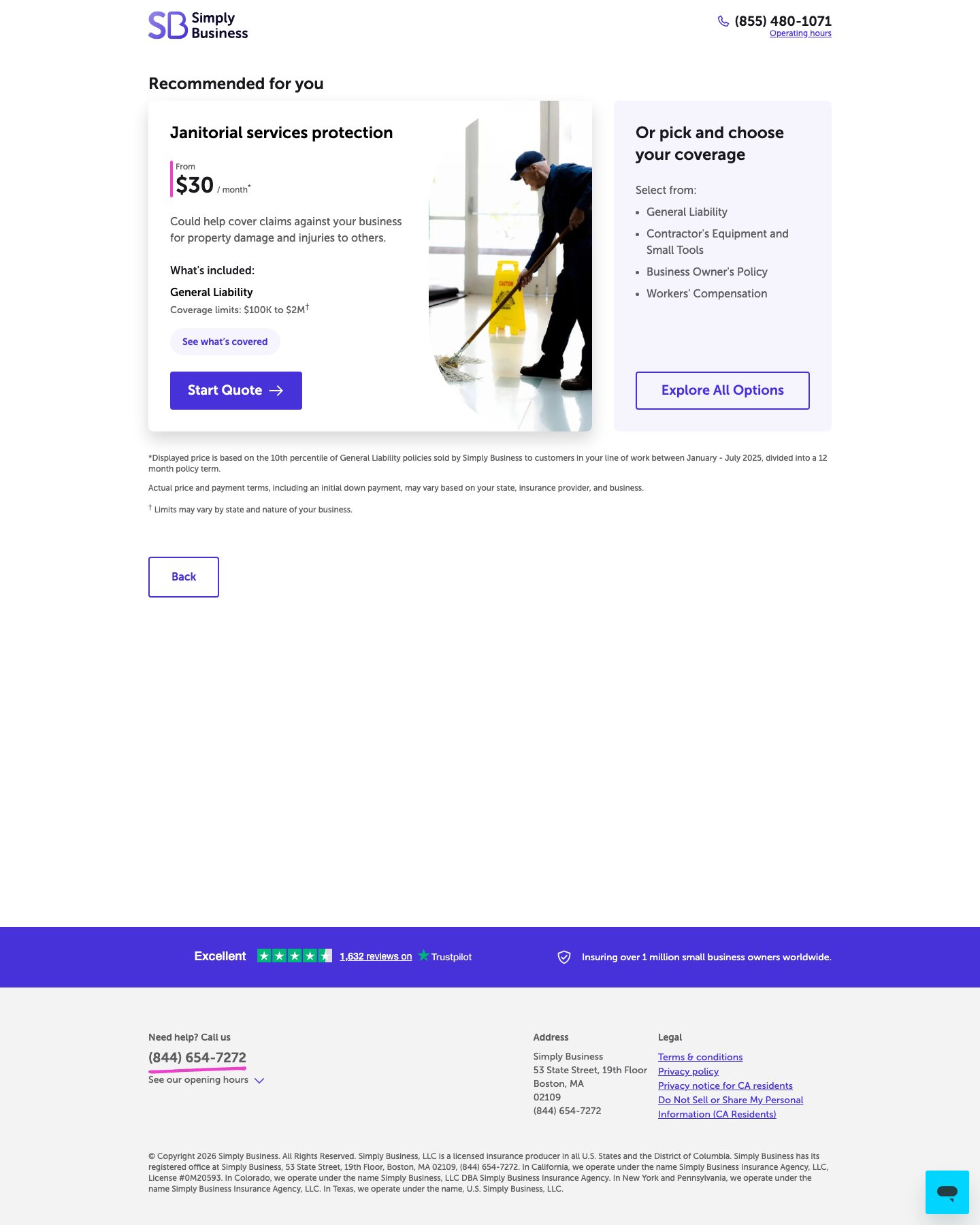
Janitorial gets a lighter package with tools coverage and a cleaner jump to a fast-lane quote path.
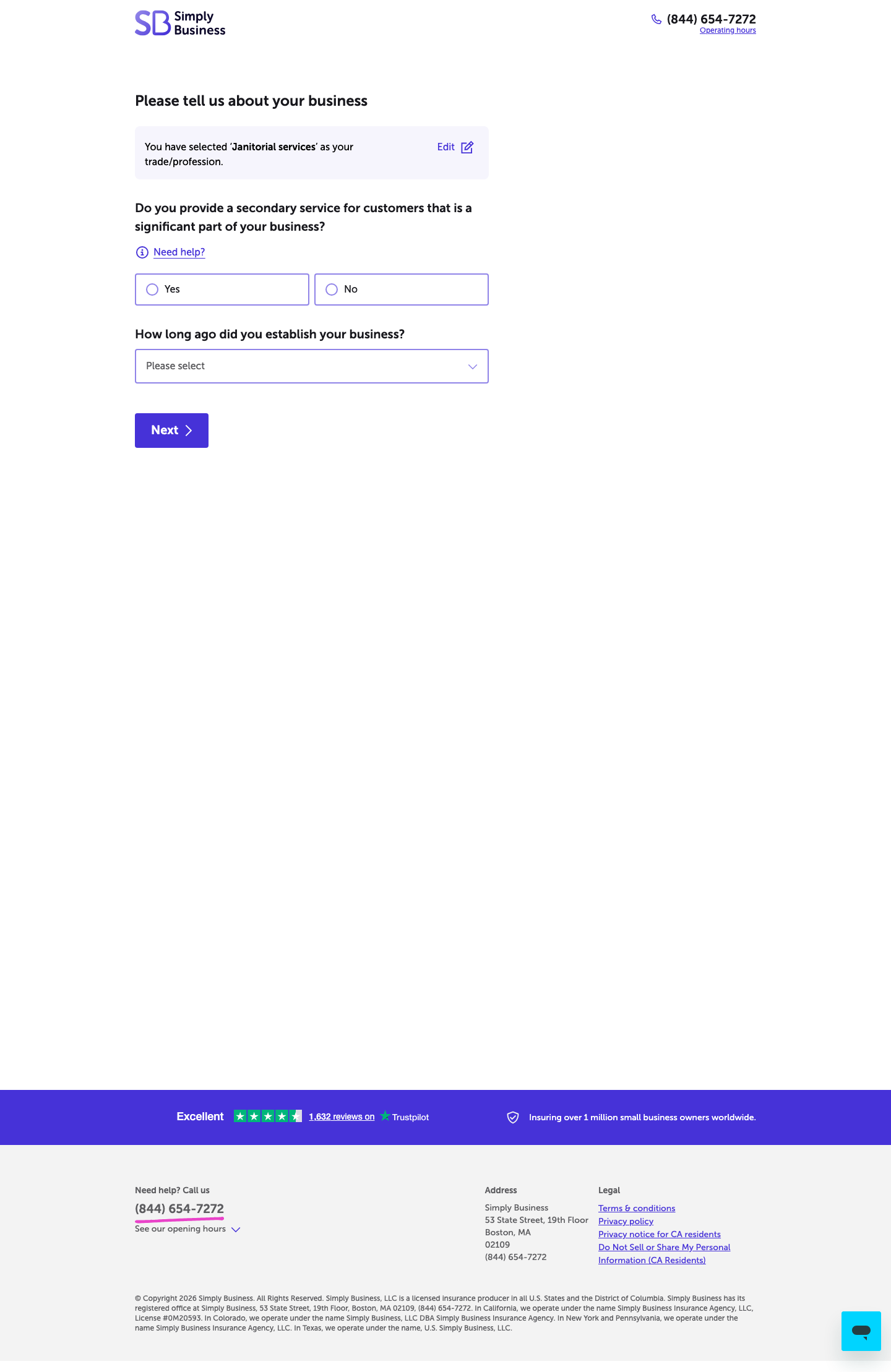
The shell collapses into a much slimmer question stack with a plain Next button and fewer visible asks.
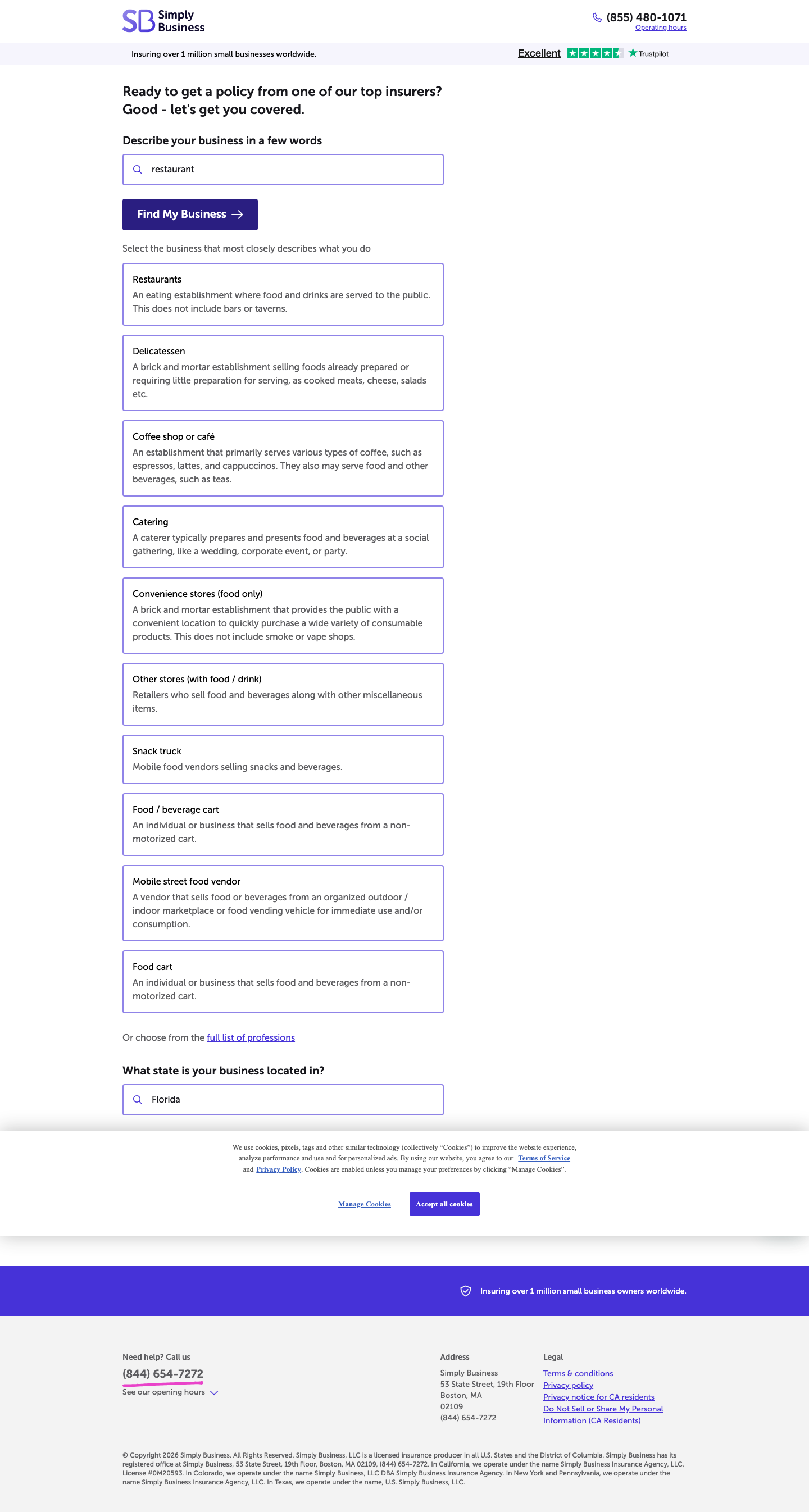
Food service is not treated as one bucket. The search results already reflect Simply Business’s internal ontology.
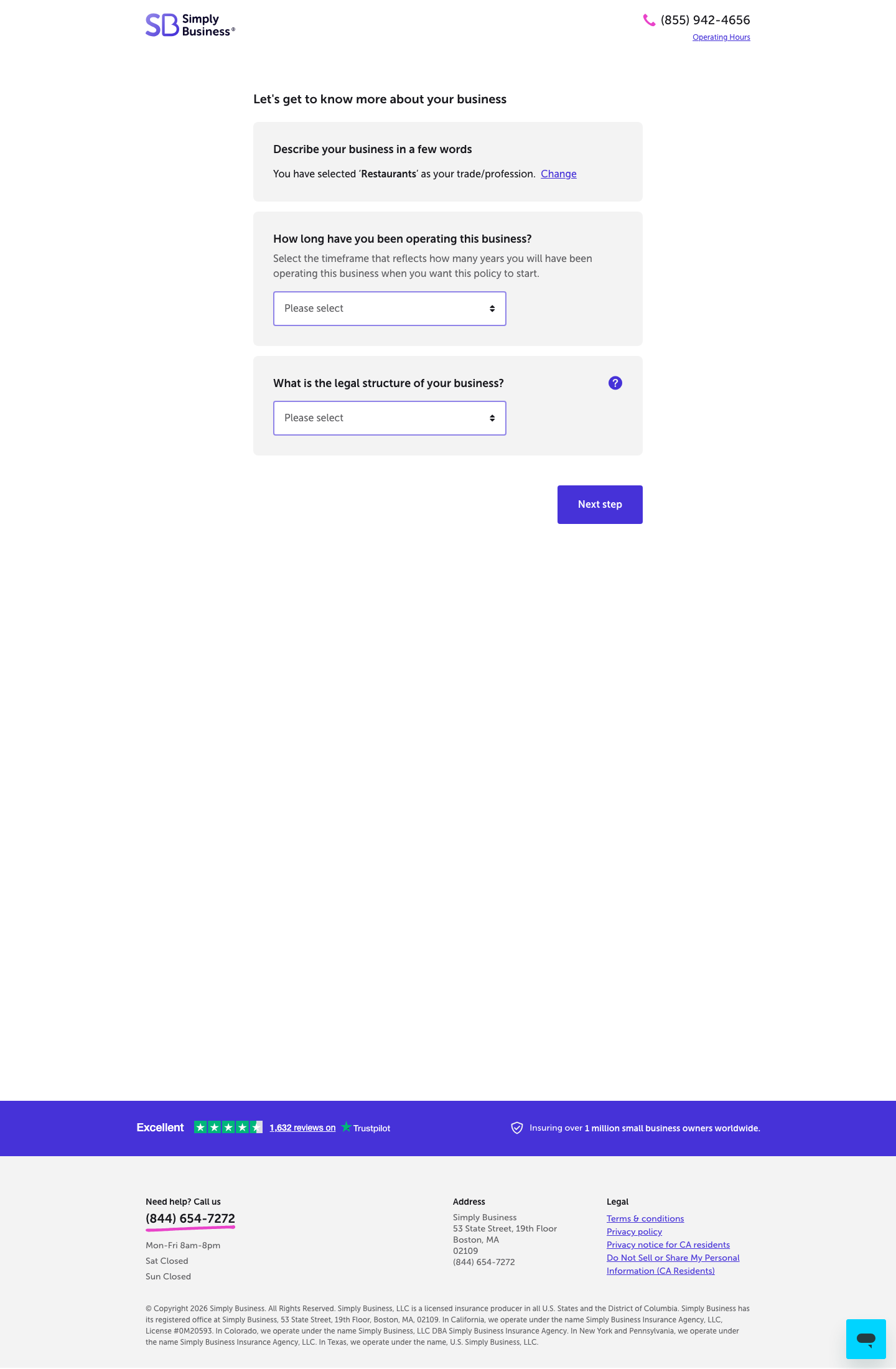
The restaurant route becomes policy-specific, which reinforces the seriousness of the package framing.
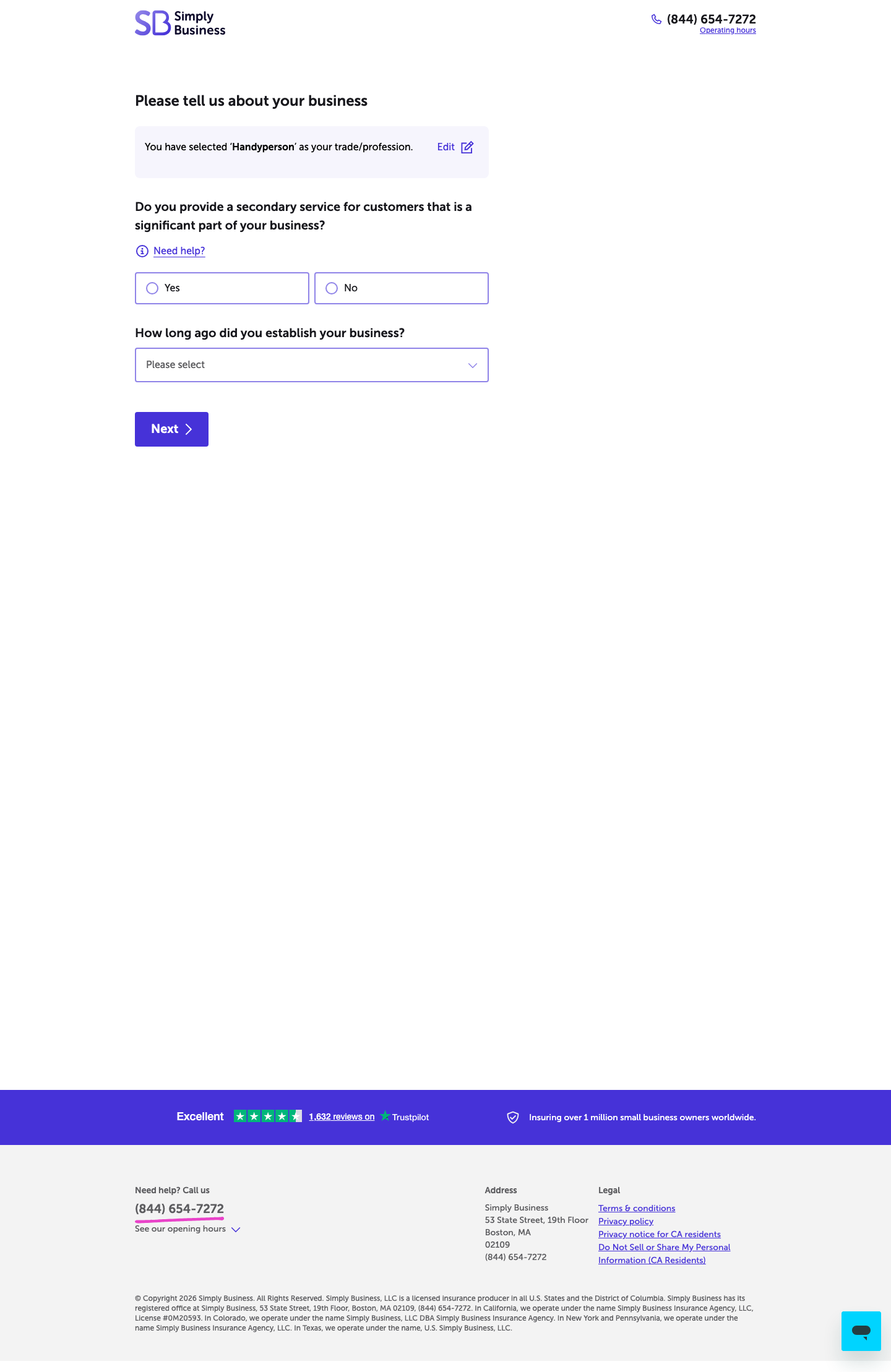
After correction, the user is not returned to contractor underwriting. They are sent into a lighter handyperson funnel.